Kraków or Prague? How to Choose
 By Ryan Mitchell
Kraków and Prague often get lumped together when people talk about an affordable few days in central Europe: old neighborhoods, trams, beer, cafés and plenty within walking distance.
But after three weeks of working remotely from Kraków in October and two weeks in Prague in April, I think the differences are bigger than they first look. The choice affects your daily budget, your pace and how much time you spend getting around.
I compare the two cities on five points: prices, size and distances, food and cafés, day trips and crowds.
Prices
On everyday prices, the two cities were closer than I expected. In Kraków, a simple restaurant meal often ran about 45 to 50 Polish zloty, and a cappuccino 15 to 17 zloty. I could work from cafés, eat lunch out and still keep my everyday spending pretty modest.
Prague can be done on a budget too. A simple meal runs roughly 230 to 250 Czech korunas, and a coffee about 80, which works out to about the same as in Kraków. Public transit is cheap as well: a 30-minute ticket in the app costs 36 korunas, and a 24-hour ticket 140 (about $6.60).
In Kraków, a 15-minute ticket costs 4 zloty, and a 24-hour ticket for zone I is 20 zloty (about $5.40). Over a week, you'll notice the difference. Over a weekend it matters less, especially if your room is already booked.
Size and distances
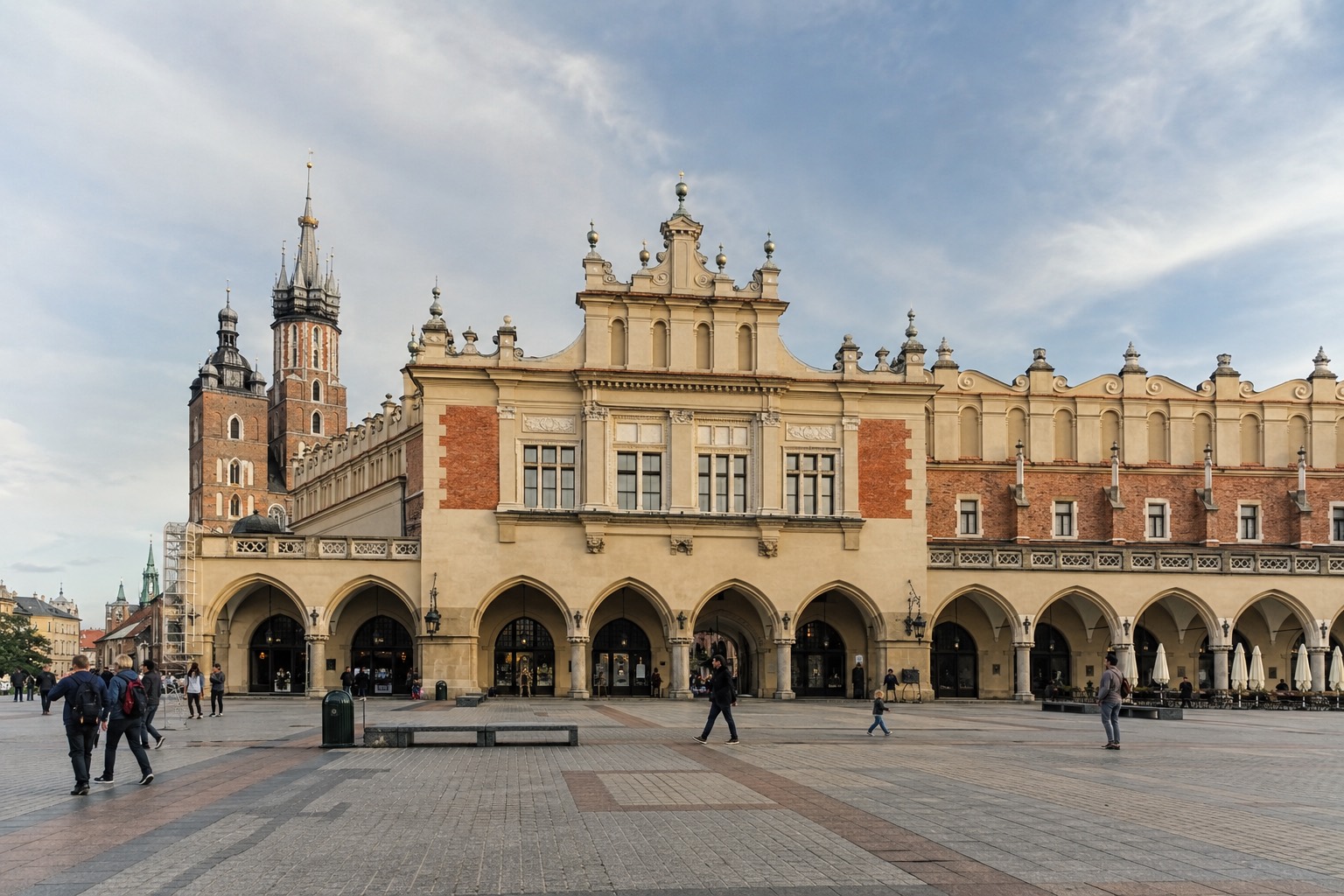
Kraków is easier to get your head around from day one. It's just under a mile from the Main Market Square (Rynek Główny) to Plac Nowy in Kazimierz, or about 20 minutes on foot at a normal pace. Keep going to Podgórze and it's still a walk most people would call reasonable.
I mostly took the tram when I was going farther or wanted to save time between work sessions. Line 3 stops at Starowiślna and Poczta Główna, among other places. That makes it handy for getting between Kazimierz and the center.
Prague is walkable too, but it spreads out more. Walking from Old Town Square to Malá Strana takes about 15 to 20 minutes, while Vinohrady is more like 20 to 25 minutes from the Old Town. Then there are the hills around Malá Strana and Hradčany, the castle district. But Prague makes up for it with better public transit. Tram 22 stops at Náměstí Míru, Malostranské náměstí and Pražský hrad, near the castle. So Prague feels bigger to me, but it's also easy to get around.
Food and cafés
This one is closer. Kraków gave me more for my money, especially around Kazimierz and on the streets leading away from the Main Market Square. Lunch for 40 to 50 zloty was easy to find without much planning.
The cafés also worked well for remote work. I often settled in Kazimierz, where you can switch between Plac Nowy, quieter side streets and the area down toward the Vistula without going far. That suited the way I travel better than going out of my way for one particular café.
Prague has more variety between neighborhoods, though. Vinohrady, Žižkov and Karlín each have a clearly different feel, and two weeks in I was still finding new cafés and places to eat. Kraków wins on ease, while Prague wins if you want more neighborhoods to choose from.
Day trips
Kraków has two major day trips within easy reach. The train from Kraków Główny, the main station, to Wieliczka takes about 25 minutes, and Wieliczka Rynek-Kopalnia station is close to the salt mine. There are direct trains to Oświęcim, and the entrance to the Auschwitz-Birkenau memorial is about a mile from the station.
Either trip can easily fill half a day or a whole day, but Auschwitz-Birkenau is obviously not an ordinary tourist outing. I'd set aside plenty of time and not plan anything lighthearted right after.
If you're staying a week, Prague gives you more day-trip options. Kutná Hora is about an hour by train from Praha hlavní nádraží, the main station, and Karlštejn about 40 minutes. In Karlštejn you also have a walk up to the castle from the station. With three nights, I think Kraków has more than enough without a day trip, but with six or seven nights, Prague's easy side trips win this round.
Crowds
For me, this is the biggest practical difference. In Prague, the route between Old Town Square, Charles Bridge and Malá Strana could get packed by midday in April. You'll get where you're going, but the pace is often set by the group in front of you.
Kraków has the same problem around the Main Market Square and Wawel Castle, especially in the middle of the day. But I found the crowds thinned out faster when I walked toward Kazimierz or across the river to Podgórze. In October it was easy to find quieter streets within a 10- to 15-minute walk.
If walking in a stream of tourists gets on your nerves, I'd pick Kraków. You can avoid the crowds in Prague, but you'll more often have to change your timing or your route.
| Category | Kraków | Prague |
|---|---|---|
| Prices | Lunch 45–50 zloty, 20-zloty day ticket | Lunch around 240 korunas, 140-koruna day ticket |
| Size and distances | Compact, very walkable | Bigger, better public transit |
| Food and cafés | Good value and easy | More variety |
| Day trips | Wieliczka, Oświęcim | Kutná Hora, Karlštejn |
| Crowds | Easier to escape | Busier tourist routes |
My verdict
If you have three or four days, I'd pick Kraków. It's more compact and easier to enjoy without a plan. You spend less time getting from place to place and more time on what you actually came for.
With a week, it's a closer call, and I think Prague is the better fit if you like moving between neighborhoods, are happy to ride public transit and want to fit in a day trip. Vinohrady in the morning and Malá Strana in the evening feel like two different parts of the trip, even though tram 22 ties them together.
My own favorite is still Kraków. I liked being able to close the laptop, walk 20 minutes and end up somewhere completely different without checking a single departure time. And after three weeks I still had the same little habit: an extra coffee in Kazimierz that wasn't in the spreadsheet.